Monday, 17 May 2021

English grammar words charts


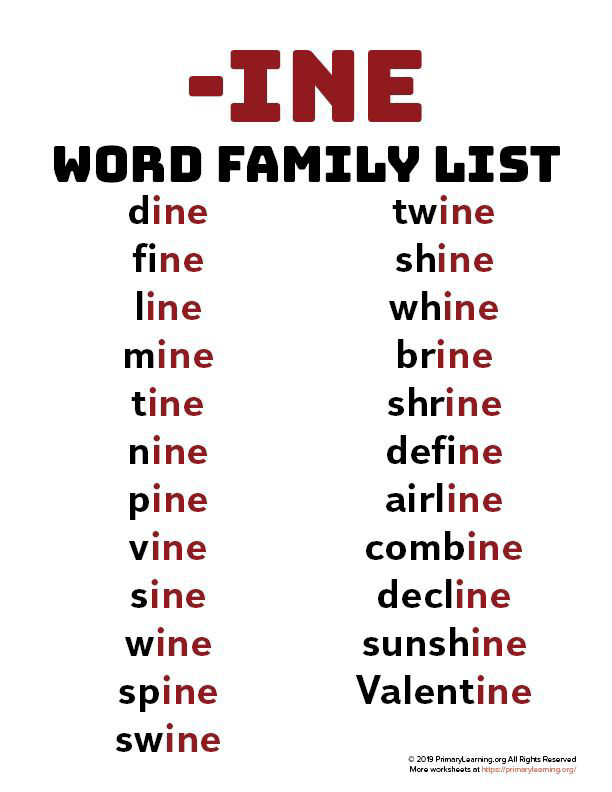
Ending of the building words
Beginning Blends


For more information, send this to my 6360396463 no for whats Join Group

ENGLISH GRAMMER - 02

Active and passive voice:-

Only TRANSITIVE VERB has two voices - Active and Passive Voices

Subjects, Verb and Objects

  • Subjects - One who does an action.
  • Verb - Action is called verb.
  • Objects - One who is affected by the action of subject.

Example
  • The teacher punished the boy.
  • Subject - teacher
  • Verb - punished
  • Object - boy

The teacher punished the boy. (Active Voice)
When this sentence is converted to passive voice the 'object' act as 'subject' and vice-versa.
The boy was punished by the teacher. (Passive Voice)
  • Subject - boyTeacher
  • Verb - punished
  • Object - teacher

Example
  • The dog bit the man. (Active Voice)
  • The man was bitten by the dog. (Passive Voice)

I gave him a rupee. (Active Voice)
A rupee was given to him by me. (Passive Voice)
He was given a rupee by me. (Passive Voice)

When Active Voice contains two object the passive voice can be written in 2 forms such as..

Example
  • The teacher gave me two books. (Active Voice)
  • Two books were given to me by the teacher. (Passive Voice)
  • I was given two books by the teacher. (Passive Voice)

Here 'two books'(Direct Object) and 'me'(Indirect Object) are the two objects.
I gave him a rupee. (Active Voice)
A rupee was given to him by me. (Passive Voice)
He was given a rupee by me. (Passive Voice)
If Active Voice contains 'Continous Form Of Verb(verb showing a continous action) then use 'being' with verb in Passive Voice

Example
  • Juli is writing a letter. (Active Voice)
  • A letter is being written by juli. (Passive Voice)

If Active Voice is in 'Perfect Tense' then use 'been' in Passive Voice

Example
  • John has killed a snake. (Active Voice)
  • A snake has been killed by John. (Passive Voice)

If Active Voice is in 'Future Tense' then use 'been' in Passive Voice

Example
  • He will have brought some oranges. (Active Voice)
  • Some oranges will have been brought by him. (Passive Voice)
__________________________________________
Adverbials:-
Adverbials modify or tell us something about the sentence or the verb. It may be a single adverb, a phrase, or a prepositional phrase, or clause element.

When an adverbial modifies a verb, it changes the meaning of that verb.

Example
  • The people looked at me.
  • The people looked at me anxiously. (The verb looked suddenly has a very different meaning).

When an adverbial modifies a sentence, the meaning of the sentence changes.

Example
  • I passed all of my exams.
  • Surprisingly, I passed all of my exams.

Word groups that are also considered to be adverbials can also modify verbs: a prepositional phrase, a noun phrase, a finite clause or a non-finite clause.

Multi-word adverbials are sometimes called adverbial phrases.

Example
  • I ran as quickly as I could, but I missed the bus.

If a whole clause acts as an adverbial, it's called an adverbial clause.

Example
  • I'll go to bed when the film ends.
__________________________________________
Articles:-
Adjective a,an the are called articles.

Example
  • Everest,London,Mumbai,New york

Type of Articles

INDEFINITE ARTICLES

'a or an' are indefinite articles and are used when to say about not a definite person, place or thing.

Example
  • I saw a girl.(any girl --not definite)
  • He gave me an orange.

DEFINITE ARTICLES

'the' is called definite article and is used when to say about a definite person, place or thing.

Example
  • I saw the girl who secured the first rank.(girl --is definite)

Usage of Definite Articles

'the' is used before the following common noun.
Example
  • the sun, the moon, the planet, the sky, the earth

'the' is used before a particular person or thing already referred to.
Example
  • The boy whom I met yesterday.
  • The book that I gave you.

'the' is used before some books.
Example
  • The Ramayana
  • The Koran.
  • The Bible.

'the' is used before name of rivers,mountain,seas,oceans,islands..etc.

Example
  • The Ganges
  • The Nile.
  • The Laccadive.

'the' is used before a singular noun that represents the whole class.

Example
  • The cowis a domestic animal.
  • The rose smells sweet.
  • The parrotis a beautiful bird.

'the' is used before superlatives.

Example
  • The highest mountain in the world.
  • The best picture I have ever seen.

'the' is not used before proper noun.

Example
  • Mumbai is a major port in India.
  • Pacific is the deepest ocean.
__________________________________________
Capitalization:- means using a capital letter (for example, A instead of a). The use of capital letters helps readers read your writing without confusion.

Always capitalize the following:

The first word in a sentence.
  • I grew up in India.
  • S he left a message on my phone.
The pronoun I.
  • This country is where I dreamed of.
The first letter of a proper noun (specific name).
  • D avid wants to play soccer with us.
  • This letter is from C hang.
  • I graduated from the U niversity of N ew Y ork.
  • I like C oca- C ola.
  • She likes G odiva chocolates.
The first letter of months, days, and holidays (but not seasons).
  • Today is J une 8, 2011.
  • Susie's birthday is this T hursday.
  • The shops are closed on E aster.
  • This summer is going to be very hot.
The first letter of nationalities, religions, races of people, and languages.
  • We often eat I talian food.
  • I want to master many languages, such as S panish, K orean, C hinese, and R ussian.
  • There is one C hristian church in my town.
The first letter in a person's title.
  • This is D r. Simon.
  • I got it from M r. Tom.
Geographic areas: cities, states, countries, mountains, oceans, rivers, etc.
  • My destination is P aris, F rance.
  • Hawaii is in the middle of the P acific O cean.
Historical periods.
  • The R enaissance began in the 14th century.
  • The Q ing D ynasty is the last dynasty in China.
The first letter of each major word in the title of a book, movie, article, etc.
  • Tolstoy's W ar and P eace is my favorite novel.
  • I found the article " H ow to W rite a G ood C over L etter" in this magazine.

Correctly write each sentence using proper Capitalization.

1) i was born in shanghai, china, but grew up in the united states.
2) mrs. ohana gave me the bible.
3) if you walk two more blocks, you will be able to see mt. rocky.
4) my family will have a summer vacation in hawaii.
5) I didn't want to cook tonight, so I just ordered thai food for dinner.
__________________________________________
Cases:-

Case is the grammatical function of a noun or pronoun. There are only three cases in modern English, they are subjective (he), objective (him) and possessive (his). They may seem more familiar in their old English form - nominative, accusative and genitive. There is no dative case in modern English.

The pronoun cases only three:-

  • 1. Subjective case: pronouns used as subject.
  • 2. Objective case: pronouns used as objects of verbs or prepositions.
  • 3. Possessive case: pronouns which express ownership.

PERSONAL PRONOUN

Subjective/NominativeObjective/AccusativePossessive/Genitive
Referring to the subject in a sentenceReferring to the object in a sentenceThe apostrophe form of the word ("Lynne's).
IMeMine
YouYouYours
HeHimHis
SheHerHers
ItItIts
WeUsOurs
TheyThemTheirs
WhoWhomWhose

These pronouns, and who and its compounds, are the only words that are inflected in all three cases (subjective, objective, possessive). In nouns the first two cases (subjective and objective) are indistinguishable, and are called the common case. One result of this simplicity is that, the sense of case being almost lost, the few mistakes that can be made are made often, even by native speakers, some of them so often that they are now almost right by prescription.

__________________________________________
Common mistakes (confused words)
1 Accept ,Except
The words, 'accept' and 'except' are homophones which are often confused by English speakers. 'Accept' is a verb which means 'to receive' or 'to agree'. Most of the time 'except' is used as a preposition which means 'excluding'.


The following examples will make the usage clear.

Accept (VERB)Except (PREPOSITION)

Amit accepted the job offer.

I can come with you on all days except Sunday.

Sanjiv accepted the allegation that he had cheated.

All the athletes except Anjali finished the race.

He accepted the invitation to the party.

Everyone except Shantanu was invited to the party.

__________________________________________
2. Bought, Brought

The difference between these two words is a very simple one. They are the past tenses of two different verbs.

'Bought' is the past tense of 'buy'.

Example
  • I bought a new car last week.

'Brought' is the past tense of 'bring'

Example
  • I brought him a glass of water.

The difference can be remembered easily too, as 'bring' shares its first two letters with 'brought' ('br').

__________________________________________

3.Can , May

 Many English speakers are confused about the usage of the words 'can' and 'may'. For e.g., 'Can I drink water?' is incorrect. 'May I drink water?' is the correct phrase to use in this case.


The key difference between 'can' and 'may' is that 'can' talks about ability and 'may' talks about permission.

CAN

Can is used in two cases:

To talk about ability.


Example
  • can finish my homework by 5 pm.
  • Can you finish your homework tonight?

To ask or give permission informally.


Example
  • Can I use your pen? (To a friend)
  • You can use my pen. (To a friend)

MAY

May is generally used to ask or give permission formally.

Let us take a situation between a student and a teacher.


Example
  • May I drink water?
  • Teacher: Yes, you may.

Let us take a situation between two strangers.

Example
  • May I borrow your pen?
  • Yes, you may.

__________________________________________

4. Affect, Effect

Two words commonly confused by English speakers are 'effect' and 'affect'. 'Affect' is used as a verb and means 'to have an influence on' and 'Effect' is used as a noun and means 'the result'.

AFFECT


Example
  • The dropped catch did not affect the result of the game.
  • The heavy rainfall affected the grains kept in the old warehouse.

EFFECT


Example
  • The effect of the tsunami was devastating.
  • The side effect of the cough syrup was drowsiness.

__________________________________________

5. Have, Has

'Have' and 'has' are both used to denote possession, form the perfect tense, and the past tense of both is 'had', but they are used differently.

Have

'Have' is used with the following pronouns: I, you, we, they.

Example
  • I have a pencil.
  • We have a big house.

Pluralised nouns

Example
  • Doctors have a rough time, dealing with illnesses all the time.

Has

'Has' is used with the third person singular ( he, she, it) .

Example
  • She has your money.
  • Amit has the book.

_________________________________________

6. There, Their, They're

Many speakers tend to get confused between 'There', 'Their' and 'They're' and knowing how to use these three words correctly is an important step in learning English.

The words 'There' and' Their' are homophones. Homophones are words that are spelt differently but pronounced the same. It is a common mistake to replace one for the other.

'There' always refers to a place, whether concrete or abstract, whereas 'Their' shows belonging or possession. 'They're, on the other hand, is the short form of they are

Let's look at these examples for each of them

THERE

Example
  • How can anyone live there?
  • Let's go there.
  • There will be a party tomorrow,

THEIR

Example
  • Let us buy their car.
  • Let us not go to their house.
  • Return their books tomorrow.

THEY'RE

Example
  • They're sitting there in their car.

In this sentence, notice how 'there' is used to signify a place whereas 'their' is used to show possession. The word 'they're' is a contraction of the word 'they' and 'are' and should not be confused with 'their' and 'there'.

✍️T. A Chandrashekhar

Sunday, 16 May 2021

English Grammar No- 01


What is Grammar ?

Science that deals with correct use of language both in conversation and writing.

Sentence

Group of words which makes complete sense.

Example
  • The Earth goes around the sun.
  • Where do you come from ?

Phrase

Group of words which makes sense but not complete sense.They have no subject or predicateof their own.

Example
  • in search of.
  • as soon as possible.

Clause

Group of words which forms part of a sentence, and contains a subject and a predicate.

Example
  • The man whom I hate.
  • While it is raining.

TypesOf Sentences

Statements or Assertion
A sentence that makes a statement or assertion.


Example
  • The sun rises in the east.
  • The cow eats grass.

INTERROGATIVE SENTENCE

A sentence that asks a question.

Example
  • Why did you go there ?
  • How old are you ?

IMPERATIVE SENTENCE

A sentence which expresses a command, a requestor or a wish.

Example
  • Get out of the class.
  • sit down

EXCLAMATORY SENTENCE

A sentence which expresses a sudden, strong feeling.

Example
  • How beautiful the sky is!
  • What a fine morning!
__________________________________________
PARTS OF SPEECH:-
Word used as name of a person, place or thing.
There are 8 kinds of Parts speech in English language
📚 Noun
📚 Pronoun
📚 Verb
📚 Adverb
📚 Adjective
📚 Conjunction
📚Preposition
📚 Interjection

Example
  • Everest, London, Mumbai, New york

Type of Nouns

PROPER NOUNS

Word used as name of a particular person, place or thing.

Example
  • Everest, London, Mumbai, New york

COMMON NOUNS

Name given in common to every person or thing of same class or kind.

Example
  • boy, tree, horse, king, town

COLLECTIVE NOUNS

Name of a group of person or things taken as a single whole.

Example
  • crowd, army, team, family, assembly, committee

ABSTRACT NOUNS

Name of quality, state or action of a person or thing.

Example
  • Goodness, kindness, slavery, poverty, laughter, theft, childhood

MATERIAL NOUNS

Name of materials out of which things are made.

Example
  • gold, wood, stone, iron, wool, bronze, clay.
__________________________________________
PRONOUN

Pronoun is the word used instead of a noun.

Example
  • Harry is a good boy.He rises early in the morning.( 'He' is the pronoun used instead of Harry.)
  • him, he, she, it, my, mine, our, we, ours.. etc

Type Of Pronouns

PERSONAL PRONOUNS

PERSONSINGULAR NUMBERPLURAL NUMBER
First Person
Imy
mine
me
Weour
ours
us
Second Person
Youyour
yours
you
Youyour
yours
you
Third Person
Masculine Gender
Feminine Gender
Neuter Gender
He
She
It
his
her
hers
its
him
her
it
All Genders
they
they
they
their, theirs
their, theirs
their, theirs
them
them
them

First Person stands for the person speaking.
Second Person stands for the person spoken to.
Third Person stands for any one or anything.

INTERROGATIVE PRONOUNS

Interrogative pronouns are used for asking questions.

Example
  • Who are you ?
  • who, what, which, whom, whose.. etc

RELATIVE PRONOUNS

Words such as who, what, which, that ..etc are called relative pronouns since they expresses relation between two sentences or phrases.

Example
  • I saw an old man.He was too weak to walk.
  • I saw an old man who was too weak to walk.(who is the relative pronoun added to above sentence)
  • This is what I expected.
__________________________________________
VERB
A verb is a word which tells us what a person or a thing is doing ; Verb shows an action.

Example
  • The girl eats mangoes.
  • John is telling a story.
  • eat, tell, play, run, write, open, kill...

Type of Verb

TRANSITIVE VERB

A verb which has an object is called a Transitive verb. Some time transitive verb may have two objects.

Example
  • The cow gives us milk.
  • The cow gives us -what?-- milk
  • To whom ? us

INTRANSITIVE VERB

A verb which has no object is called a Intransitive verb.

Example
  • He plays only on sundays.
  • He fought bravely.
__________________________________________
ADVERB

An adverb is a word which modifies the meaning of a Verb, an Adjective or another Adverd.

Example
  • The old man walked slowly .
  • Juli writes very carefully .
  • He works hard from dawn to night.

Type of Adverbs

ADVERB OF TIME

If a verb answers for question 'When' then the adverb shows the time of action.

Example
  • He left the place a few minutes ago.
  • He will soon come back.

ADVERB OF PLACE

If a verb answers for question 'Where' then the adverb shows the place of action.

Example
  • I met him in the theatre.
  • This is the place where the tree stood.

ADVERB OF NUMBER

If a verb answers for question 'How often' then the adverb shows the number of the action.

Example
  • The comet appears once in several years.
  • That poor man is always happy

ADVERB OF MANNER

If a verb answers for question 'How' or'In what manner' then it shows the condition of verb.

Example
  • He was seriously injured.
  • Johny writes very carefully.

ADVERB OF DEGREE or QUANTITY

If a verb answers for question 'How much' or'In what'.

Example
  • The sky is very cloudy.
  • She sings pretty well.

ADVERB OF REASON

If a verb explains the reason for the action then called adverb of reason.

Example
  • As he was not well.
  • Therefore he returned home.
__________________________________________
ADJECTIVE
Word that qualifies a noun and points out the quality,number or kind of the person, place or thing represented by the noun.

Example
  • John is a clever boy.
  • Uncle gave me a beautiful watch.
  • sweet, blue, good, bad, tall, short...

Type of Adjectives

ADJECTIVES OF QUALITY

Shows the kind or quality of a person or thing.

Example
  • He is an honest boy.
  • The elephant is black.
  • old, young, clever, wise, tall, short..

ADJECTIVES OF QUANTITY

Shows how much of a thing is meant.

Example
  • He has lost all his wealth.
  • I have enough clothes.
  • any,little, some...

ADJECTIVES OF NUMBER

Shows how many person or things are meant.

Example
  • I have two brothers.
  • Only a few students failed.
  • many, all, several...

DEMONSTRATIVE ADJECTIVES

They point out which person or thing is meant.

Example
  • The boy is taller than Alex.
  • These mangoes are sweet .
  • beautiful, that, such...

INTERROGATIVE ADJECTIVES

What,which,whose..etc : when they are used with nouns to ask questions.
Example
  • What kind of animal is this?
  • Whose book is this?
__________________________________________
CONJUNCTION

A conjunction is a word which joins together words or sentences.

Example
  • And, as, but, before, after, if, whether, than, when, that, though, for, yet, why, unless, while, lest ..etc.

Types Of Conjunction

PHRASE CONJUNCTIONS

When phrase used as conjunction they are called Phrase Conjunction.

Example
  • As soon as he saw his father,he threw the cigarette away.
  • She appeared on the scene as if she were a princess.
  • It seems as though it is going to rain.
  • The teacher as well as his student was injured.
  • This is fully correct as far as I am concerned.
  • I would not do that even if he gave thousands of rupees.
  • I worked hard so that I might get a first class.

CO-ORDINATING CONJUNCTIONS

A conjunction that joins together sentences, clauses or words of equal rank, is called a CO-ORDINATING CONJUNCTION.
Example
  • and, but, for, also, or, nor, so, yet,either..or, neither..nor
  • The idol is made of bronze and the toy is made of wood.
  • Please,take coffee or tea.
  • Do or die.

SUBORDINATING CONJUNCTIONS

A conjunction that joins a clause to the main clause in a sentence SUBORDINATING CONJUNCTION.

Example
  • after, before, because, if, whether, when, where, how,while, that, though,although, as, unless,till
  • He was absent because he was ill.
  • Strike when the iron is hot.

Some Conjunction Come In Pairs

Example
  • He is either a begger or a theif.
  • She is neither my sister nor my niece.
  • Not only I like mangoes, but also apples.
  • Though he is poor, yet he helps the needy.
  • She is both, pretty and clever.
  • Whether they bring it or not is uncertain.
  • Milton was not a politician but a poet.
  • No sooner did I see him than I saluted him.
  • Scarely had the rain stopped when I went out.
__________________________________________
PREPOSITION
A preposition is a word placed before a Noun or Pronoun to show its relation to some other word in the sentence.

Example
  • The clock is on the wall.
  • The cow is grazing in the field.
  • He is angry with you.

Sample Usage of Some Prepositions

BETWEEN and AMONG

While saying about two person or thing we use BETWEEN and while saying about more than two person or thing we use AMONG.

Example
  • Two brothers shared the apple between themselves.
  • I sat between Ancy and Juli.

BESIDE and BESIDES

Beside means by the side of.
Besides means in addition to.

Example
  • My house is beside the river.
  • He plays football besides badminton.

BY and WITH

When we say about a person who does the action we use BY.
When to say about some thing near by,or some thing along with weuse WITH.

Example
  • A snake was killed by the boy.
  • I am writing with my pen.

IN and AT

IN is used along with countries, placec cities .. etc.
AT is used along with names of towns, small villages .. etc.

Example
  • My brother lives in America.
  • The classes will begin at 10 A.M.

  • NOTE : Sometimes IN is also used to indicate 'Period of Time'. He came in time.

ON and UPON

When we say about some thing at rest we use ON.
When we say about some thing that is not at rest we use UPON.

Example
  • The clock is on the wall.
  • The tiger sprang upon a deer.
__________________________________________
INTERJECTION
A word which expresses a sudden feeling.

Example
  • Hurrah ! We have won the match.
  • Alas ! she is dead.
  • Oh ! it was horrible.
__________________________________________

20 Grammar Rules

rules of the game - football or grammar

Here are 20 simple rules and tips to help you avoid mistakes in English grammar. For more comprehensive rules please look under the appropriate topic (part of speech etc) on our grammarand other pages.

1. A sentence starts with a capital letter and ends with a period/full stop, a question mark or an exclamation mark. see Punctuation

  • The fat cat sat on the mat.
  • Where do you live?
  • My dog is very clever!

2. The order of a basic positive sentence is Subject-Verb-Object. (Negative and question sentences may have a different order.)

  • John loves Mary.
  • They were driving their car to Bangkok.

3. Every sentence must have a subject and a verb. An object is optional. Note that an imperative sentence may have a verb only, but the subject is understood.

  • John teaches.
  • John teaches English.
  • Stop! (i.e. You stop!)

4. The subject and verb must agree in number, that is a singular subject needs a singular verb and a plural subject needs a plural verb.

  • John works in London.
  • That monk eats once a day.
  • John and Mary work in London.
  • Most people eat three meals a day.

5. When two singular subjects are connected by or, use a singular verb. The same is true for either/or and neither/nor.

  • John or Mary is coming tonight.
  • Either coffee or tea is fine.
  • Neither John nor Mary waslate.

6. Adjectives usually come before a noun (except when a verb separates the adjective from the noun).

  • I have a big dog.
  • She married a handsome Italian man.
  • (Her husband is rich.)

7. When using two or more adjectives together, the usual order is opinion-adjective + fact-adjective + noun. (There are some additional rules for the order of fact adjectives.)

  • I saw a nice French table.
  • That was an interesting Shakespearian play.

8. Treat collective nouns (e.g. committee, company, board of directors) as singular OR plural. In BrE a collective noun is usually treated as plural, needing a plural verb and pronoun. In AmE a collective noun is often treated as singular, needing a singular verb and pronoun.

  • The committee are having sandwiches for lunch. Then they will go to London. (typically BrE)
  • The BBC have changed theirlogo. (typically BrE)
  • My family likes going to the zoo. (typically AmE)
  • CNN has changed its logo. (typically AmE)

9. The words its and it's are two different words with different meanings.

  • The dog has hurt its leg.
  • He says it's two o'clock.

10. The words your and you're are two different words with different meanings.

  • Here is your coffee.
  • You're looking good.

11. The words theretheir and they're are three different words with different meanings.

  • There was nobody at the party.
  • I saw their new car.
  • Do you think they're happy?

12. The contraction he's can mean he is OR he has. Similarly, she's can mean she is OR she has, and it's can mean it is OR it has, and John's can mean John isOR John has.

  • He is working
  • He has finished.
  • She is here.
  • She has left.
  • John is married.
  • John has divorced his wife.

13. The contraction he'd can mean he had OR he would. Similarly, they'd can mean they had OR they would.

  • He had eaten when I arrived.
  • He would eat more if possible.
  • They had already finished.
  • They would come if they could.

14. Spell a proper noun with an initial capital letter. A proper noun is a "name" of something, for example Josef, Mary, Russia, China, British Broadcasting Corporation, English.

  • We have written to Mary.
  • Is China in Asia?
  • Do you speak English?

15. Spell proper adjectives with an initial capital letter. Proper adjectives are made from proper nouns, for example Germany → German, Orwell → Orwellian, Machiavelli → Machiavellian.

  • London is an English town.
  • Who is the Canadian prime minister?
  • Which is your favourite Shakespearian play?

16. Use the indefinite article a/anfor countable nouns in general. Use the definite article the for specific countable nouns and all uncountable nouns.

  • I saw a bird and a balloon in the sky. The bird was blue and the balloon was yellow.
  • He always saves some of the money that he earns.

17. Use the indefinite article awith words beginning with a consonant sound. Use the indefinite article an with words beginning with a vowel sound. see When to Say a or an

  • a cat, a game of golf, a human endeavour, a Frenchman, a university (you-ni-ver-si-ty)
  • an apple, an easy job, an interesting story, an old man, an umbrella, an honorable man (on-o-ra-ble)

18. Use many or few with countable nouns. Use much/a lotor little for uncountable nouns.see Quantifiers

  • How many dollars do you have?
  • How much money do you have?
  • There are a few cars outside.
  • There is little traffic on the roads.

19. To show possession (who is the owner of something) use an apostrophe + s for singular owners, and s + apostrophe for plural owners.

  • The boy's dog. (one boy)
  • The boys' dog. (two or more boys)

20. In general, use the active voice (Cats eat fish) in preference to the passive voice (Fish are eaten by cats).

  • We use active in preference to passive.
  • Active is used in preference to passive.
__________________________________________
T.A Chandrashekhar 6360396463

Friday, 7 May 2021

Saturday, 1 May 2021

grammar test 1

Q1...... tennis every Sunday morning.
playing
play
am playing
am play


Q2.Don't make so much noise. Noriko ..... to study for her ESL test!
try
tries
tried
is trying


Q3.Jun-Sik ..... his teeth before breakfast every morning.
will cleaned
is cleaning
cleans
clean


Q4.Sorry, she can't come to the phone. She ..... a bath!
is having
having
have
has


Q5...... many times every winter in Frankfurt.
It snows
It snowed
It is snowing
It is snow


Q6.How many students in your class ..... from Korea?
comes
come
came
are coming


Q7.Weather report: "It's seven o'clock in Frankfurt and..... ."
there is snow
it`s snowing
it snows
it snowed


Q8.Babies ..... when they are hungry.
cry
cries
cried
are crying


Q9.Jane: "What ..... in the evenings?"
Mary: "Usually I watch TV or read a book."
you doing
you do
do you do
are you doing


Q10.Jane: "What ..... ?" 
Mary: "I'm trying to fix my calculator."
you doing
you do
do you do
are you doing


Q11.Jane ..... her blue jeans today, but usually she wears a skirt or a dress.
wears
wearing
wear
is wearing


Q12.I think I ..... a new calculator. This one does not work properly any more.
needs
needed
need
am needing


Q13.Sorry, you can't borrow my pencil. I ..... it myself.
was using
using
use
am using


Q14.At a school dance:
Jane: " ..... yourself?"
Mary: "Yes, I'm having a great time!"
You enjoying
Enjoy you
Do you enjoy
Are you enjoying


Q15.I've just finished reading a story called Dangerous Game. It's about a man who ..... his wife because he doesn't want to lose her.
kills
killed
kill
is killing


Q16.What time .....
the train leaves?
leaves the train?
is the train leaving?
does the train leave?


Q17.Jane: "Are you going to the dance on Friday?" 
Mary: "No, I'm not. I ..... school dances; they're loud, hot and crowded!"
not enjoy
don`t enjoy
doesn`t enjoy
am not enjoying


Q18...... for my pen. Have you seen it?
will look
looking
look
am looking


Q19.You can keep my iPod if you like. I ..... it any more.
don`t use
doesn`t use
didn`t use
am not using


Q20.The phone ...... Can you answer it, please?
rings
ring
rang
is ringing


Thursday, 22 April 2021

English Language Day

UN English Language Day

ADD ARTICLE DESCRIPTION


UN English Day is observed annually on the 23rd April. The event was established by UN's Department of Public Information in 2010 "to celebrate multilingualism and cultural diversity as well as to promote equal use of all six official languages throughout the Organization".

For the English Language Day, April was chosen because it is the date "traditionally observed as both the birthday and date of death of William Shakespeare". Other dates were selected for the celebration of the UN's other five official languages.

__________________________________________


PRESNENT TENSE

Unit Test: Present Tense Choose the correct answer. 1 of 10 I ____ in a bank. works working work is working 2 of 10 Barbara ____ everyday. r...